Material study
ConcreteThe rhythm of a facade
Repetition is rarely as uniform as it first appears.
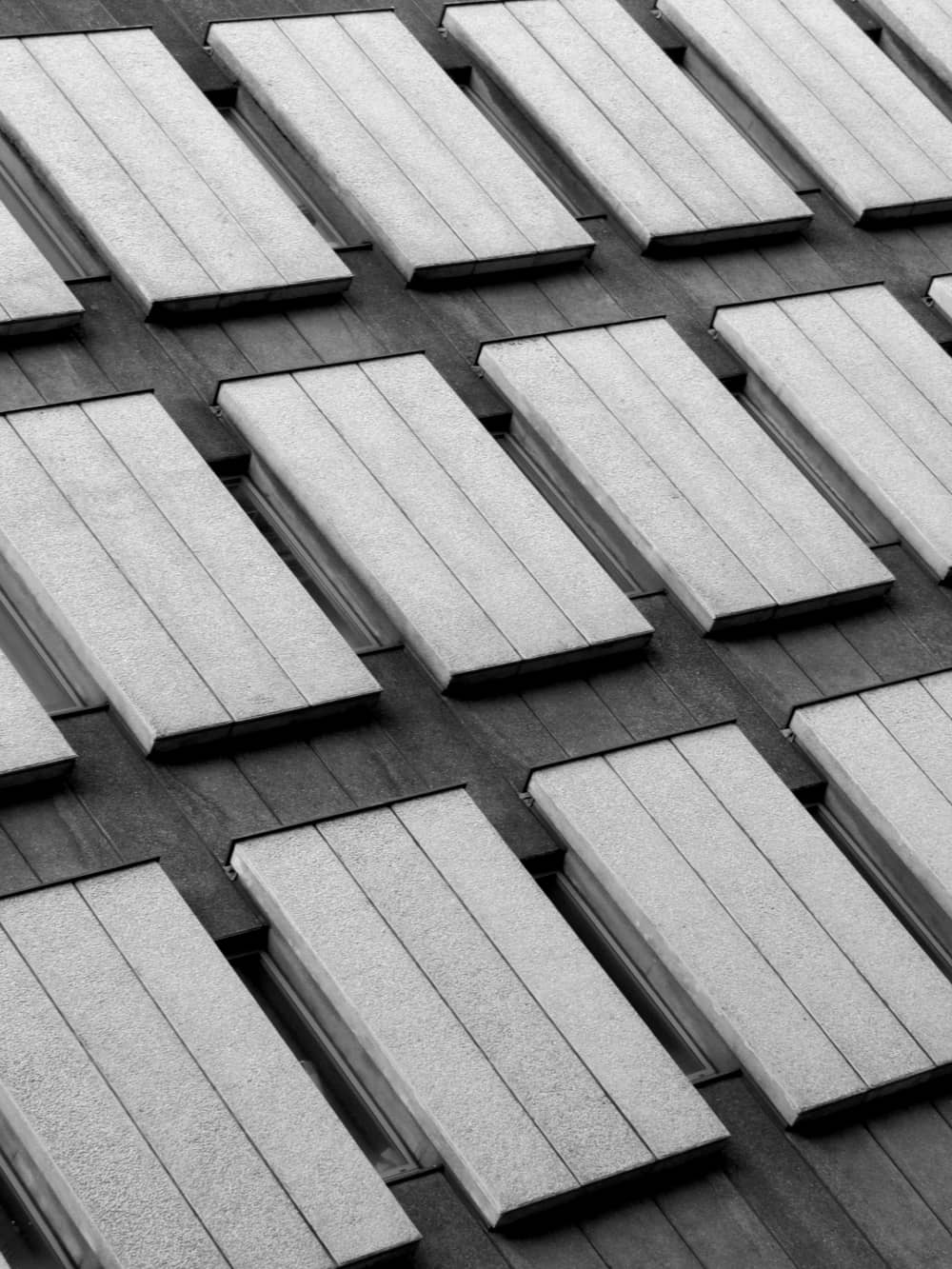
In the photograph above, pale panels repeat across a darker surface. From a distance, the eye gathers them into one pattern. Look again and the gaps become just as important as the panels: each narrow shadow gives the neighboring edge a different weight.
An oblique view makes this rhythm especially clear. Horizontal and vertical lines become diagonals, and a flat elevation begins to read as a field of shallow relief. The surface is not changing, but the angle changes which parts of it we notice.
It is tempting to explain every mark as weathering or every joint as a clue to construction. A photograph cannot settle those questions on its own. It can, however, hold an observation still: light on a face, darkness beneath an edge, and a pattern that becomes less regular the longer we look.